Finding Stillness Through the Art of Lotus Pose Meditation and Visual Storytelling
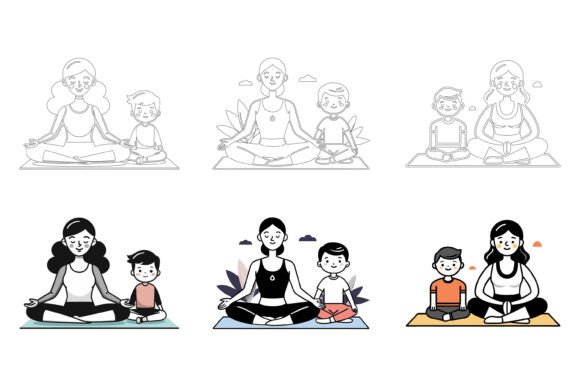
There is a peculiar kind of quiet that arrives when you settle into a cross-legged position, spine lengthening upward as the palms rest gently on the knees. For centuries, people have turned to meditate in lotus pose as a gateway to deeper awareness, a physical anchor that signals to the nervous system that it is time to slow down. But in our visually saturated world, the imagery that accompanies this practice has taken on a life of its own. Whether you are designing a wellness app, crafting an ebook on mindfulness, or building a meditation-focused website, the right illustration can bridge the gap between ancient tradition and modern digital experience. This is precisely where thoughtfully curated illustration sets become indispensable.
The Deeper Resonance of Sitting in Lotus
Padmasana, or the lotus posture, is far more than a flexibility benchmark. The crossed legs create a stable triangular base, the spine naturally aligns, and the hands find their resting place in a mudra that completes the circuit of energy. When practitioners meditate in lotus pose, they are tapping into a lineage that stretches back thousands of years. The posture encourages groundedness while simultaneously promoting an upright alertness that prevents drowsiness during longer sessions. Yet, for all its symbolic power, the lotus pose remains remarkably practical. It distributes weight evenly across the sitting bones, reduces pressure points, and allows the diaphragm to move freely, supporting the slow, rhythmic breathing that anchors any meditation practice.
Many beginners find the pose intimidating, and that is perfectly normal. Hip mobility varies widely from person to person, and forcing the legs into position can lead to knee strain. The wisdom lies in gradual progression—starting with a simple crossed-leg seated position, using cushions to elevate the hips, and slowly working toward the full expression of the posture over weeks or months. The journey of learning to meditate in lotus pose itself becomes a meditation on patience and self-compassion.
Why Visual Representation Matters in Mindfulness Spaces
Picture a meditation app interface. The user opens it seeking calm, but what greets them visually will either reinforce that intention or subtly undermine it. Generic, low-quality graphics create friction. A serene, expertly crafted illustration of a figure seated in lotus, however, communicates tranquility before a single word is read. Content creators, app developers, yoga instructors, and wellness brands understand this intuitively. They need assets that do justice to the practices they represent. This is why meditate in lotus pose has become one of the most sought-after themes in digital illustration collections—it carries universal recognition while remaining deeply personal to those who practice.
Hello Welcome to Our Special AI EPS Collections – What Makes These Illustrations Stand Apart
When we set out to build this collection, the guiding principle was utility without compromise. Every illustration had to be beautiful as a standalone piece, yet flexible enough to integrate seamlessly into diverse projects. Whether you are creating print materials, web graphics, icons for a mobile app, or infographics for a wellness blog, the assets must adapt without losing their character. The collection bridges artistic warmth with technical precision—a combination that is rarer than it should be in the stock illustration world.
Masterfully Organized File and Layer Structure
One of the quiet frustrations designers face is opening a downloaded illustration file only to find a chaotic mess of unnamed layers and grouped objects that defy logic. Our collection prioritizes a neatly organized file and layer structure from the ground up. Every element is intuitively labeled, grouped, and arranged so that you spend your time creating rather than untangling. This might sound like a minor detail, but in a professional workflow spanning dozens of assets, it transforms efficiency. You can locate the exact arm position, the lotus petal shading, or the meditator's silhouette and modify them independently without disturbing the rest of the composition.
When a designer needs to represent someone who has taken time to meditate in lotus pose, they might want to adjust the skin tone, the clothing color, or even the background environment to match a brand palette. With a sensible layer hierarchy, these adjustments take seconds rather than minutes. Multiply that across a full project timeline, and the cumulative benefit is substantial.
Cross-Platform Compatibility: Designed for Mac and Windows Users
Design ecosystems are wonderfully diverse, and a file format that performs flawlessly on one operating system should not stumble on another. The collection is designed for Mac and Windows users, ensuring that regardless of your setup, the AI, EPS, and JPG files open and function as intended. Adobe Illustrator remains the gold standard for vector editing, but compatibility extends to Affinity Designer, CorelDRAW, and other mainstream tools on both platforms. The EPS format, in particular, provides broad compatibility for those who need to import illustrations into varied design environments without conversion headaches.
This cross-platform reliability becomes especially meaningful in collaborative settings. A yoga studio in one city might have a designer on Windows crafting print brochures featuring figures who meditate in lotus pose, while a remote web developer on a Mac builds the studio's online booking interface using the same visual assets. Consistency across platforms keeps the visual identity cohesive and the workflow frictionless.
Perfection in Details and Consistency
Visual inconsistency is the enemy of professionalism. When a brand uses multiple illustrations across a website, app, and printed materials, even slight stylistic mismatches register subconsciously with the audience. Our collection is built with absolute perfection in details and consistency. Every line weight, every color gradient, every geometric proportion follows a unified visual language. A figure seated in lotus for one illustration will share the same anatomical proportions and stylistic treatment as a figure in another scene, ensuring that your project feels cohesive rather than cobbled together from disparate sources.
The attention to detail extends to subtle elements that elevate the work. The gentle curve of a meditating figure's spine, the natural placement of fingers in a dhyana mudra, the shading that gives depth without distraction—these are not afterthoughts. When someone gazes at an illustration of a person who has paused to meditate in lotus pose, the details should draw them into a contemplative headspace, not jolt them out with awkward proportions or sloppy rendering.
Built for Versatility Across Mediums
The modern content landscape demands assets that transition fluidly across contexts. A single illustration might begin life on a website hero banner, migrate to an Instagram post, shrink down to an app icon, and eventually appear in a printed manual. This collection is suitable for print, web, symbols, apps, and infographics. The vector foundations mean infinite scalability—enlarge an illustration to billboard dimensions without pixelation, or reduce it to a favicon without losing legibility. The included JPG versions provide ready-to-use raster formats for quick deployment when vector editing is unnecessary.
Consider a wellness coach building an online course around the theme of inner stillness. The landing page needs a hero graphic, the lesson modules need icons, the downloadable workbook needs decorative elements, and the social media campaign needs shareable visuals—all tied together by the motif of learning to meditate in lotus pose. A versatile illustration set becomes the visual backbone of the entire product ecosystem, maintaining brand integrity at every touchpoint.
Effortless Customization to Match Your Vision
Template rigidity is the quickest path to generic-looking design. The real power of a well-built illustration collection lies in how easily the user can reshape it to their specific needs. You can edit it, change colors, and modify the icon so easily according to your needs. Swap serene blue robes for earthy terracotta tones to align with a brand palette. Adjust the background from a minimalist circle to a full scenic environment. Modify facial features or hairstyles to better represent your audience. Because the vector architecture preserves editability at every level, these customizations require no advanced technical skill—just a willingness to explore and adapt.
A meditation studio catering to a specific cultural community might want illustrations that reflect their demographic more closely. A corporate wellness program might need a more subdued, professional aesthetic compared to a bohemian yoga retreat. The flexibility baked into the files ensures that the same foundational artwork can serve vastly different purposes, each implementation looking uniquely tailored rather than off-the-shelf. Every time someone sees a figure who has chosen to meditate in lotus pose within your materials, the representation should feel intentional and resonant.
The Hidden Advantage of AI EPS Format for Long-Term Projects
There is a practical, forward-looking reason to invest in AI and EPS formats for your illustration library. Unlike raster images that are locked at a specific resolution from the moment of creation, vector files remain infinitely editable. A logo that includes a stylized meditator in lotus can be revisited years later, colors updated, proportions refined, all without quality degradation. As your brand evolves, your assets evolve with you. This longevity makes vector collections a far more economical choice than repeatedly purchasing new raster graphics for each project iteration.
Furthermore, the editable nature of these files means you can extract individual elements to build entirely new compositions. Isolate the lotus flower, the meditator's silhouette, or the subtle halo effect, and combine them with other design elements to create something wholly original. The collection becomes not just a set of finished illustrations, but a design toolkit whose potential applications expand with your creativity. The figure who chose to meditate in lotus pose in one graphic might become part of a larger mandala, a repeating pattern, or an abstract brand mark in your next project.
Who Benefits Most from This Illustration Collection
Yoga instructors and studio owners building class schedules, workshop flyers, and online presence find immediate utility. The imagery speaks directly to their audience without requiring custom illustration commissions that strain limited budgets. App and web developers crafting meditation timers, mindfulness journals, or wellness platforms appreciate the organized layer structures that integrate smoothly into UI design workflows. Content marketers in the health and wellness space can maintain a consistent visual rhythm across blog posts, email newsletters, and social channels. Print designers producing books, magazines, or merchandise value the print-ready quality and scalable vectors. Anyone whose work touches the themes of stillness, self-care, or contemplative practice will recognize the resonance these illustrations bring.
The Intersection of Ancient Practice and Modern Design
What makes the visual representation of meditation so compelling is the paradox it embodies. The practice of sitting in lotus is radically simple—no equipment, no technology, just the body and breath in quiet communion. Yet translating that simplicity into digital form requires sophisticated design thinking. The illustration must convey depth without clutter, serenity without sterility, and universal appeal without losing cultural authenticity. When executed well, an illustration of someone pausing to meditate in lotus pose becomes a portal. A busy professional scrolling through an app sees it and remembers, even if just for a moment, that stillness is available. A stressed student glimpsing a poster registers a subconscious invitation to breathe.
This is the quiet power of visual storytelling in the mindfulness space. It does not demand attention so much as it gently suggests a different way of being. The right illustration does not shout over the noise; it creates a pocket of silence within it. That is the standard to which these collections aspire, and it is what makes the difference between a generic stock image and an asset that genuinely serves the practice it depicts.
So what are you waiting for? Buy now and start using this awesome illustration. Whether you are launching a new meditation app, refreshing a yoga studio's brand identity, or building educational content around the art of seated meditation, these assets are ready to elevate your vision. The individuals in your audience who seek out spaces where they can meditate in lotus pose deserve visuals that honor the depth and dignity of their practice. With a thoughtfully crafted illustration set, you can provide exactly that—and do so with efficiency, consistency, and creative freedom.