How Rocket Is Redefining Visual Storytelling in the Age of AI-Enhanced Design
In a world where visual communication determines whether your message cuts through the noise or fades into the background, the tools you choose matter more than ever. Rocket has emerged as a compelling force in the creative landscape, offering a collection of AI-enhanced EPS illustrations that speak directly to the needs of modern designers, marketers, entrepreneurs, and content creators. But Rocket is not simply another set of icons or vector graphics. It represents a shift in how creative professionals approach visual asset creation, workflow efficiency, and brand storytelling.
This article explores what makes Rocket significant in today's design ecosystem, why it has captured attention across multiple industries, and how it reflects broader changes in creative technology, consumer expectations, and professional workflows. Whether you are building a brand from scratch, refreshing a digital product, or crafting an infographic that needs to land with precision, understanding the value proposition of Rocket helps you make smarter decisions about your visual toolkit.
What Is Rocket and Why Does It Belong in the Conversation?
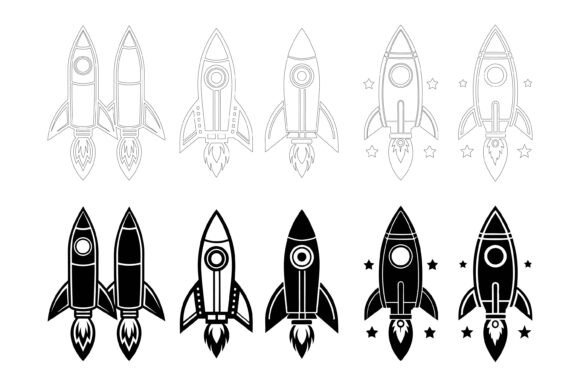
At its core, Rocket is a curated collection of AI EPS illustrations designed for flexibility, precision, and ease of use. The files arrive in industry-standard formats including AI, EPS, and JPG, making them compatible with both Mac and Windows environments. But reducing Rocket to a file format discussion misses the point entirely. What makes Rocket noteworthy is the philosophy behind its construction: every element is meticulously organized, every layer structured for intuitive editing, and every detail refined to a level of consistency that seasoned designers immediately recognize and appreciate.
The term Rocket itself evokes speed, trajectory, and forward momentum—concepts that resonate deeply with professionals who understand that time is their most valuable asset. When you open a Rocket illustration file, you are not wrestling with chaotic layers, inconsistent stroke widths, or poorly aligned anchor points. You are stepping into a thoughtfully prepared creative environment where the heavy lifting has already been done.
The Broader Context: How Visual Content Became Non-Negotiable
To understand why collections like Rocket are gaining traction, you need to look at the larger picture. Visual content has transitioned from a nice-to-have to an absolute requirement across virtually every industry. Websites, mobile applications, social media feeds, email campaigns, pitch decks, and printed collateral all demand a level of visual polish that was once reserved for large agencies with deep budgets.
Several converging trends have accelerated this shift:
- The democratization of design tools has empowered non-designers to create visual content, but many still lack access to high-quality source files they can genuinely customize.
- Remote work and distributed teams require asset libraries that are cross-platform compatible and easy to share, modify, and implement without friction.
- Shorter campaign cycles mean creative teams need to move from concept to execution faster than ever before.
- Brand consistency demands have intensified as companies manage presence across dozens of channels simultaneously.
- AI-assisted design is reshaping expectations around what pre-built assets can and should offer.
Rocket enters this environment not as a novelty but as a practical response to real-world creative pressure. The collection's emphasis on editability, organized file structures, and cross-application suitability makes it a natural fit for professionals who need reliable assets that adapt to their specific requirements.
Why People Are Paying Attention to AI-Enhanced Illustration Sets
The creative community is notoriously discerning, and for good reason. Poorly constructed vector files waste time, introduce errors, and ultimately cost more than they save. When a collection like Rocket generates genuine interest, it is usually because it addresses pain points that designers have been quietly enduring for years.
1. The Edibility Imperative
One of the most significant friction points in using pre-made illustrations is the difficulty of customization. Many collections look beautiful in preview but become nearly impossible to modify once opened. Colors are embedded in ways that resist global changes, shapes are expanded when they should remain editable, and layer names bear no resemblance to the actual objects they contain.
Rocket takes the opposite approach. The files are built with the understanding that no two projects are identical. A color palette that works for a fintech startup will not necessarily suit a wellness brand. An icon set destined for a mobile app needs to scale differently than one headed for a billboard. The Rocket collection accommodates this reality by providing structured, well-named layers and fully editable vector elements that let you change colors, adjust proportions, and modify individual components without breaking the integrity of the design.
2. Consistency Across Touchpoints
Brands today live across an unprecedented number of surfaces. An illustration that appears on a website hero section might also need to work in an email footer, a printed brochure, a trade show banner, and an in-app onboarding flow. Maintaining visual coherence across these varied contexts requires illustrations built with systematic precision.
Rocket illustrations exhibit a consistency of style, line weight, and detail density that makes them cohesive when used together. This coherence is not accidental; it is the result of a disciplined design process that treats illustration as a system rather than a collection of isolated pieces. For marketing teams managing multi-channel campaigns, this systemic quality translates into measurable time savings and a more polished end product.
3. Cross-Platform Compatibility as a Baseline Expectation
In 2025, the idea that a creative file might not work seamlessly on both Mac and Windows feels archaic. Yet the reality is that compatibility issues still plague many design assets. Rocket explicitly addresses this by delivering files in formats that are tested on both platforms. AI and EPS formats remain the backbone of professional vector workflows, and the inclusion of JPG previews ensures that even team members without specialized software can browse and reference the collection.
This cross-platform reliability is particularly valuable for agencies and in-house teams where designers may use different operating systems. It eliminates the friction of file conversion and the risk of corrupted elements that can derail a tight production schedule.
How Changing Workflows Make Collections Like Rocket More Relevant
The way creative work gets done has changed dramatically. The traditional model of a designer working in isolation with a single set of tools has given way to collaborative, iterative, and often asynchronous workflows. Cloud-based design platforms, real-time collaboration features, and the integration of AI into creative software have all contributed to an environment where flexibility and adaptability are paramount.
In this context, the value of a well-organized illustration set extends beyond the files themselves. When a designer can open a Rocket file and immediately understand its structure, they can share it with a junior team member, hand it off to a motion designer, or import it into a prototyping tool without writing lengthy documentation. The organized layer structure functions as a form of silent communication, conveying intent and making collaboration smoother.
Consider a practical scenario: A marketing team is preparing a product launch. The web designer needs icons for the landing page, the content creator needs supporting graphics for a blog post, the social media manager wants matching visuals for Instagram stories, and the presentation designer is building a pitch deck for stakeholders. With a Rocket illustration set, all four team members can work from the same source material, confident that colors can be adjusted to match brand guidelines and that individual elements can be repurposed without visual inconsistency. The result is a faster approval cycle and a more unified brand presence.
The Intersection of AI and Traditional Vector Craft
The mention of AI in the context of illustration sometimes raises eyebrows among purists who associate artificial intelligence with generic, soulless output. However, the most effective AI-enhanced design tools operate as collaborators rather than replacements. In the case of collections like Rocket, AI is leveraged at the creation and organization stage to ensure precision, consistency, and efficiency—while the artistic direction and stylistic decisions remain firmly in human hands.
This hybrid approach captures the best of both worlds. The speed and pattern-recognition capabilities of AI help produce meticulously consistent shapes, uniform spacing, and harmonious color relationships. Meanwhile, experienced designers guide the creative vision, curating the collection for aesthetic appeal and practical usability. For the end user, this means they receive files that feel thoughtfully crafted rather than mechanically generated.
Practical Applications Across Industries
The versatility of Rocket illustrations makes them suitable for a remarkably wide range of applications. The following examples illustrate how different professionals might integrate these assets into their work:
- App developers incorporating Rocket illustrations into onboarding flows, empty states, and navigation elements, knowing they can resize and recolor every icon to match their interface design system.
- Infographic designers using the illustrations as a foundation for data visualization projects, where consistency of style helps viewers process complex information more easily.
- Print designers leveraging the high-resolution vector output for everything from business cards to large-format signage, confident that the artwork will scale without degradation.
- E-learning creators building course materials that require clear, engaging visuals to explain concepts and maintain learner engagement across modules.
- Freelancers serving multiple clients across different industries who need a reliable, adaptable illustration library that can be customized quickly for each project.
In each of these scenarios, the common thread is the need for editable, consistent, and professionally constructed vector assets that do not introduce friction into the workflow.
What to Look for in a Quality Illustration Collection
For professionals evaluating whether a collection like Rocket is right for their needs, several criteria deserve careful consideration. These same criteria apply broadly when assessing any illustration set, making them useful guideposts regardless of the specific product under review.
Organizational clarity should be immediately apparent. Files must have logical layer names, grouped elements that make sense, and a structure that allows you to isolate components without hunting through dozens of unnamed paths. Stylistic consistency across the entire collection ensures that illustrations from different categories can coexist harmoniously within a single project. Genuine editability goes beyond the ability to change a fill color; it means being able to adjust stroke widths, modify shapes, remove or add elements, and adapt the illustration to your specific context without distortion or artifacts.
Rocket addresses these criteria directly, which explains why the collection resonates with users who have been burned by less carefully constructed alternatives. The emphasis on detail and consistency is not just a marketing claim; it is a structural characteristic baked into how the files are built.
The Forward Look: Visual Assets in a Changing Creative Economy
As the creative economy continues to evolve, the demand for high-quality, adaptable visual assets will only intensify. Several developments suggest that collections like Rocket are well-positioned for continued relevance:
The creator economy has produced a vast population of independent professionals who need agency-quality visuals but operate on independent budgets. These creators cannot afford to commission custom illustrations for every project, yet they also cannot sacrifice the quality that distinguishes their work. Well-built illustration sets bridge this gap, offering professional-grade assets at accessible price points.
Brand velocity—the speed at which companies must produce and refresh content—continues to accelerate. Marketing teams that once planned campaigns quarterly now operate on weekly or even daily content cycles. In this environment, the ability to rapidly customize and deploy illustrations directly impacts competitive positioning.
Design system thinking has expanded beyond user interface components to encompass illustration, iconography, and brand imagery. Organizations increasingly recognize that their visual language needs the same systematic treatment as their code libraries. Rocket's internally consistent, well-organized structure aligns with this design system philosophy, making it easier for teams to integrate the illustrations into broader brand frameworks.
Making the Decision: Is Rocket Right for Your Workflow?
Choosing an illustration collection is ultimately a decision about how you want to work. If your workflow demands speed without compromise, if you value the ability to customize every element, and if you work across multiple platforms and applications, then the characteristics that define Rocket—organized files, cross-platform compatibility, stylistic consistency, and genuine editability—are likely aligned with your needs.
The question to ask is not simply whether an illustration looks attractive in a preview gallery. The real test is what happens when you open the file, attempt to modify it, and integrate it into a real project under a real deadline. Professionals who have experienced the frustration of poorly constructed vector assets understand the difference immediately. They recognize that a file structured for editing, with carefully named layers and logically grouped elements, can save hours of tedious work over the course of a single project.
Conclusion: The Value of Intentional Design Assets
Rocket is more than an illustration collection. It is a case study in what happens when creative assets are built with genuine respect for the professionals who will use them. In a marketplace flooded with generic, inconsistently constructed vector files, a collection that prioritizes organization, editability, and cross-platform reliability stands out not because of flashy promises but because of practical, demonstrable quality.
For designers, marketers, entrepreneurs, and creators who understand that their visual assets directly shape how their audience perceives them, the decision to invest in well-crafted illustrations is a decision to invest in their own credibility. The ability to change colors, modify elements, and adapt illustrations to specific needs without wrestling with file structure is not a luxury—it is a baseline requirement for efficient, professional creative work.
The broader lesson is clear: as the volume of visual content in the world continues to grow, the quality and intentionality behind that content become the true differentiators. Rocket embodies that principle, offering professionals a tool that respects their skills, supports their workflows, and enables them to produce work that meets the high standards of today's visually sophisticated audiences. Whether you are building an app, crafting an infographic, designing a presentation, or refreshing a brand, the illustrations you choose say as much about your standards as the message they help you convey.