Mastering Visual Communication with a Comprehensive Set of Insect Illustrations
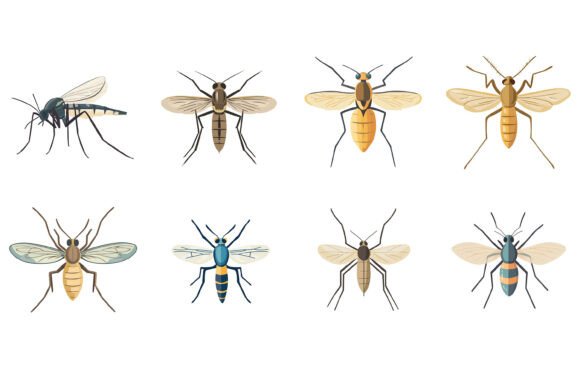
In a landscape where visual clarity often dictates a user's next click or a client's buying decision, the assets you choose carry strategic weight. A thoughtfully assembled Set of Insect illustrations delivers more than decorative value. Packaged with AI, EPS, and JPG file formats, and designed to operate seamlessly on both Mac and Windows, its immediate technical accessibility matters. But the deeper opportunity rests in its neat organization, logical layer structure, and painstaking attention to detail. For anyone responsible for conveying ideas through imagery—entrepreneurs, educators, freelancers, and design professionals—this kind of resource can transform a chaotic workflow into a deliberate, result-oriented process. The crucial question is not whether you can use these insect graphics, but how you will integrate them to sharpen your communication and achieve durable outcomes.
Evaluating the Core Structure of the Insect Asset Pack
Before committing any illustration to a project, serious practitioners examine its foundational qualities. This particular Set of Insect distinguishes itself through internal order. Poorly arranged files waste mental energy and interrupt creative flow; here, every element resides where intuition expects it. Layers are named and grouped logically, allowing you to isolate a dragonfly's delicate wing or adjust a beetle's shell without dismantling the artwork. Such organization is a form of professional courtesy—it respects your timeline and reduces the friction that often derails a late-stage design revision.
Perfection in detail across dozens of insect variants ensures that a butterfly placed next to an ant maintains proportional harmony and stylistic unity. When you scale a cricket for a large-format tradeshow banner or compress a firefly into an app icon, the integrity of the shape holds. The simultaneous availability of editable vector sources (AI/EPS) and flat raster copies (JPG) grants you the flexibility to move from high-end print production to quick web mockups without format agonies. This technical foresight means the set can serve as a cornerstone of an adaptable visual library, not just a one-off download.
Strategic Timing: When to Deploy Pre-Made Illustrations
Reaching for a stock illustration set isn’t an admission of creative deficiency. It is a practical recognition that your time, budget, and cognitive resources are limited. Commissioning a custom insect illustration for a single blog post or a short-lived social media campaign rarely passes a cost-benefit test. Yet, an editable EPS set can be recolored, reshaped, and combined within minutes to deliver a custom feel at a fraction of the expense. The strategic advantage surfaces when you reserve your most intensive creative energy for the core elements that truly differentiate your message—like a unique data visualization or a bespoke brand mark—and let well-crafted supplementary graphics handle the supporting visual narrative.
Publishers drafting educational content about pollinators, for example, can use these accurate renderings to replace lengthy descriptive passages. An entrepreneur building a pesticide-free skincare brand might pull the honeybee and lavender motifs to forge an immediate emotional bond with eco-conscious buyers. In each case, the Set of Insect acts as an accelerant, permitting rapid prototyping and iteration that aligns with fast-moving market windows. The goal is purposeful deployment, not indiscriminate use.
Practical Applications Across Key Domains
To move from abstract potential to concrete results, consider how various roles might apply these graphics with intentionality:
- Brand Identity Development: Rather than selecting a generic wildcard icon, a boutique garden supply shop might adopt a praying mantis as a secondary brand element. By pulling the vector from the set, tweaking the mandible curve to soften it, and applying a signature moss-green palette, the graphic becomes proprietary. It can then live across packaging, loyalty cards, and website footers, building subtle customer recognition.
- Instructional and Corporate Training Materials: A safety officer designing a handout about outdoor workplace hazards can replace grim photographs with clear, unthreatening insect symbols. A tick, a mosquito, and a spider—edited to a uniform line-art style—communicate risk without causing visual repulsion. The layered EPS structure lets you add warning overlays or sequential numbering for a flowchart effect.
- Digital Product UI/UX Elements: In a nature journaling app, a small, responsive ladybug might indicate a user's saved entries. A fluttering moth icon could signal batch photo editing. By consistently sourcing from the same Set of Insect, developers maintain UI consistency. JPG previews allow quick stakeholder approvals, while the underlying vectors move gracefully into final production.
- Infographic Storytelling: A nonprofit advocating for monarch butterfly conservation can build a visual narrative where habitat loss is represented by fading butterfly silhouettes over a timeline. The organized layers allow opacity shifts, color drains, and size transformations without cracking the visual cohesion.
Planning and Setup: Laying Groundwork for Successful Edits
A powerful asset can still fail if you open it without a plan. Before double-clicking that EPS file, pinpoint at least two upcoming projects that directly need insect motifs. This prevents the collection from gathering digital dust. If you manage a seasonal “Backyard Biodiversity” blog series, map out exactly which insects assignments need: a cicada for an article on sound, a bee for pollination, an aphid for pest management. Having these use cases defined sharpens your editing decisions and reduces the temptation to force a graphic where it doesn’t belong.
Evaluate your team’s vector editing competence. While AI and EPS formats unlock infinite customization, they demand software like Adobe Illustrator or the free Inkscape. If no one on the team feels confident, a short skills investment—or delegating to a junior designer with clear guides—pays back rapidly. Failing to prepare for the editing stage often leads to frustration; users might fall back on static JPGs and miss the transformative value of changing colors, stripping details, or merging elements to create entirely new symbols. Thoughtfulness at this stage directly correlates with final output quality and creative satisfaction.
The Hidden Risks of Random Decoration
Without a sound visual strategy, even the most meticulously crafted set can undermine your objectives. The primary hazard is stylistic collision. Dropping a hyper-realistic, highly detailed beetle illustration into a flat, minimalist web interface creates jarring dissonance. Your audience’s eye stumbles; their trust in your professionalism erodes unconsciously. To avoid this, use the editable vectors to enforce uniformity. Reduce complex insects to their essential silhouettes, apply your existing stroke weights, or constrain to a monochromatic scheme that mirrors your brand.
Contextual blindness presents another risk. Symbolism varies sharply across audiences. While many cultures view butterflies as positive transformation symbols, other insects carry fear or disgust. An ant might signify teamwork to one viewer and infestation to another. Before applying any graphic, ask what the image communicates in the specific setting of your SaaS dashboard, educational pamphlet, or event invitation. Use the editorial power the Set of Insect gives you—soften angles, add a gentle leaf background, or pair the image with affirmational text—to guide interpretation toward your intended meaning. Design empathy here prevents missteps that could damage audience trust.
Building Long-Term Value Through Systematic Reuse
A single-use mindset limits what this asset can do for your organization. Professionals who think in systems treat the Set of Insect as a living component library. After customizing an insect for one campaign, document the hexadecimal color codes, the scaling percentage used, and the simplified version paths in a shared brand guide. Store the final outputs in a cloud folder accessible to all collaborators, complete with title tags such as “Branded Bumblebee – Primary (Large Print)” and “Branded Bumblebee – App Icon (24px).”
This practice compounds over time. A marketing manager at a nature center no longer needs to re-explain the visual direction to every freelance designer hired. A YouTube content creator can quickly populate video title cards with on-brand element animations because the foundational graphics are ready and approved. Operational efficiency increases, errors decrease, and brand coherence strengthens. You shift from a reactive fire-fighting posture to a proactive resource management model—an underrated yet high-return discipline in creative business.
Making the Decision: Aligning Resources With Real Needs
Before acquiring any illustration pack, pause and audit your immediate visual roadmap. Ask: Will I use at least three of these insect graphics in the next quarter for tangible deliverables? If you’re a wellness coach launching a “Grounded Growth” program, a ladybug for pacing metaphors and a dragonfly for adaptability themes might become symbolic pillars across your workbook and email series. If you can name those specific, time-bound applications, the purchase aligns with operational reality, not vague creative aspiration.
Weigh the cost against alternative paths. A custom illustrator could capture a singular, highly personalized vision—but at a price and timeline that often disrupts iterative marketing schedules. This Set of Insect, with its cross-platform flexibility and perpetual editability, functions as a dependable baseline that never demands another usage fee. Yet, if your brand promises 100% handmade authenticity in every pixel, a stock set—no matter how polished—might feel off-brand. The soundest decision balances economic sense with brand integrity, always prioritizing what will resonate genuinely with the people you serve.
Ultimately, a resource like this elevates more than just a page layout. When used with clear intent, it becomes a strategic tool for faster communication, stronger identity signals, and more cohesive storytelling. Each insect graphic moves from a passive image file to an active participant in your project's narrative—provided you deploy it with the same care and purpose you bring to every other critical decision.