Cute Fairy Silhouette Illustration Set
Adding a touch of whimsy to design projects often comes down to choosing the right visual elements. A Cute Fairy Silhouette Illustration Set offers one possible way to inject fantasy, delicacy, and storytelling into your work without relying on highly detailed or photorealistic artwork. This particular set is packaged with vector files, broad compatibility, and an organized internal structure that promises ease of use for both novice and experienced creators. But how do you know if a collection like this aligns with your actual needs? This article examines what the set includes, explores its strengths and limitations, and helps you decide whether it belongs in your creative toolkit.
What Is Included in This Illustration Set
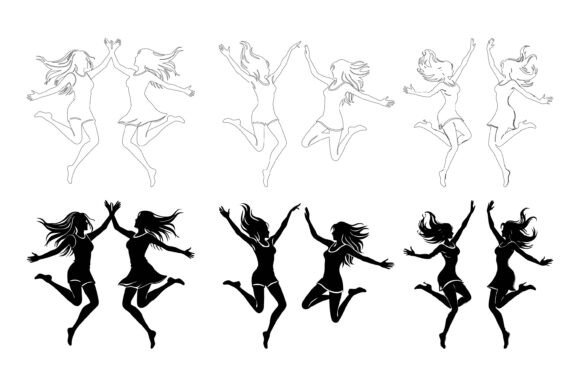
At its core, the package provides a series of fairy silhouettes designed as vector illustrations. The files come in widely recognized formats: AI (Adobe Illustrator), EPS (Encapsulated PostScript), and JPG. This format combination is intentional, giving you the flexibility of fully editable vectors alongside a simple raster fallback for quick placement. Because the files are designed to work seamlessly on both Mac and Windows operating systems, cross-platform collaboration becomes less of a headache. The collection emphasizes neat organization: internal file and layer structures are logically arranged so you can locate specific elements, isolate individual fairies, or adjust grouping without wasting time untangling a messy artboard. Consistency in line quality, proportion, and styling runs throughout the set, ensuring that the silhouettes feel cohesive when used together.
Reasons to Consider a Silhouette-Based Fairy Collection
Silhouettes carry a distinct visual language. Without internal details like facial features or intricate clothing patterns, they rely on shape and posture to communicate meaning. This can be a deliberate design choice. A fairy in silhouette becomes a symbol rather than a specific character, which allows it to adapt to various contexts—from playful children’s materials to more mystical, atmospheric branding. Even though the set is labeled “cute,” the absence of color and complicated strokes often makes the imagery versatile across different age groups and industries.
People researching illustrative resources might gravitate toward this kind of set because it reduces decision fatigue. Instead of endlessly tweaking shading or hue, you get refined outline shapes ready to integrate. The style also lends itself well to layering with textured backgrounds, typographic compositions, or light boxes without overpowering other elements. Whether you’re crafting a logo concept, decorating an event invitation, or building a mobile app interface, silhouettes can provide a clean, recognizable icon-like presence that scales effortlessly.
The Practical Benefits of an AI and EPS Format Collection
Having editable vector files at your fingertips changes how you interact with the artwork. Some of the practical upsides include:
- Color and size freedom: Since the silhouettes are resolution-independent, you can enlarge a fairy to billboard dimensions or shrink it to an app icon without softening edges or risking pixelation. The AI and EPS formats allow you to recolor elements swiftly. Want all fairies in a soft lavender for a baby shower theme or a metallic gold for a premium product label? The change is straightforward.
- Modification friendly: Need a different wing shape, a variation in pose, or to remove an accessory? Vector paths are editable down to individual anchor points. The neat layer structure mentioned in the description becomes important here—it means you likely won’t have to spend time ungrouping hundreds of scattered objects just to make a small tweak.
- Print and web readiness: The included JPG files offer immediate raster options for quick mockups or web uploads, while the vector formats support high-resolution commercial printing. This dual-use nature reduces the need for multiple separate purchases for different media.
- Organized workflow: Consistent naming conventions, logical grouping, and non-destructive layering can save significant hours if you plan to use the assets repeatedly across a series of projects.
Tradeoffs and Limitations to Keep in Mind
No illustration set fits every situation perfectly. One of the first considerations is that working with AI and EPS files requires compatible vector editing software. While many designers use Adobe Illustrator, CorelDRAW, or free alternatives like Inkscape, someone who primarily works in raster programs without vector editing capabilities might face a learning curve. Opening and modifying EPS files, in particular, can occasionally present font or formatting inconsistencies if the original file was created with specific Adobe features. However, the fact that this set is “designed for Mac and Windows users” suggests the creator paid attention to cross-platform stability.
Silhouettes, by definition, are one-dimensional in terms of internal detail. If your project demands intricate fairy expressions, realistic wings with transparency, or character-driven scenes, a silhouette set will not deliver those nuances. It is better suited for symbolic, graphical, or decorative purposes rather than immersive storytelling. Additionally, the “cute” descriptor hints at a particular aesthetic—soft, rounded, perhaps more childlike than ethereal or gothic. While the absence of detail leaves some interpretive room, the overall proportion and pose language might still lean toward a cheerful, approachable mood rather than a dark or elegant one. Carefully review sample images before committing to ensure the vibe matches your intended tone.
Situations Where This Set Is a Strong Fit
When a project calls for consistent, scalable, and easily styled fairy motifs, this type of collection often shines. Consider these scenarios:
- User interface elements: App developers might integrate simplified fairy icons as part of a gamified reward system, an educational tool, or a theme-based navigation set. The vector format ensures crisp rendering across variable screen densities.
- Print collateral for children’s events: Birthday invitations, party decorations, or sticker sheets benefit from cute, recognizable shapes that can be recolored to match event palettes quickly.
- Infographics and diagram embellishments: A fairy shape can serve as a whimsical bullet point, section marker, or background pattern without distracting from data-heavy content.
- Branding for fantasy-themed small businesses: Bakeries, boutiques, or handmade toy shops that want a subtle magical touch might use silhouettes as part of their primary or secondary logo design.
- Educational or therapeutic materials: Simple, non-threatening shapes often work well in resources for children, while the silhouette nature avoids overstimulation from too many visual details.
In each of these cases, the ability to edit colors and modify shapes without losing quality becomes a strong practical advantage over static clip art or fixed-color icon packs.
When Alternatives Might Be Worth Exploring
Not every creator will find the value here. If the following situations describe your project, you may want to consider other types of illustrative assets:
- You need richly detailed, painted or 3D-looking fairies: Silhouettes cannot replace hand-drawn or digitally painted characters. In contexts like illustrated books, detailed game sprites, or large-scale mural concepts, you will likely need artwork with shading, texture, and facial expression.
- Color variety is essential from the start: While the vector format allows you to add color, the package itself is based on solid silhouettes. If you prefer a pre-colored, ready-to-use collection with multiple skin tones, hair colors, and wing gradients, a fully rendered set may save you time.
- Highly specific cultural or historical fairy representations: Generic “cute” silhouettes might not capture nuanced folklore-specific elements. A project requiring accurate cultural attire or distinct regional fairy depictions would need customized illustration work.
- You lack vector editing software and do not intend to learn it: The JPG is a handy addition, but the full potential of the set lies in the vector files. If your workflow is entirely raster-based and you cannot justify the time to acquire and learn vector tools, a high-resolution PNG set or a simpler drag-and-drop image pack could be more pragmatic.
Practical Insights for Making Your Decision
Before adding any illustration collection to your library, ask a few guiding questions. Is the majority of your work print-only, web-only, or a mix? Do you regularly need to adapt assets across wildly different sizes and color schemes? Are you comfortable navigating layer panels and bezier curves, or would you rather work with pre-composed scenes? The Cute Fairy Silhouette Illustration Set appears designed for creators who value flexibility, organization, and the ability to make rapid modifications without starting from scratch. If those criteria align with your day-to-day work, the set could prove to be a useful resource that you revisit across multiple client or personal projects.
At the same time, managing expectations is vital. A silhouette-based set does not aim to replace fully rendered illustrations, nor does it claim to be more than what it is. Its appeal lies in the clean, editable shapes that can quietly enhance a composition. The consistency across the collection means you won’t have to wrestle with mismatched line weights or oddly proportioned wings when combining pieces, which is a common pain point with less curated bundle deals.
Consider testing your intended use case mentally: imagine placing a fairy from this set into a sample design you are currently working on. Would the shape alone convey the mood you want? Can you achieve the necessary contrast against your background? If the mental mockup feels harmonious, the technical file attributes—layered editing, cross-format compatibility, and platform independence—become the supporting pillars of a sound purchase decision.
Also reflect on long-term value. If you design seasonal materials, an illustration set that can be recolored for different holidays, events, or brand refreshes extends its usefulness well beyond a single campaign. The organized layer structure mentioned in the description might be especially meaningful here, as it allows you to hide or show individual elements, alter wing positions, or tweak silhouettes without disturbing adjacent artwork.
Finally, remember that even the most versatile asset is only as effective as the context you place it in. Pairing silhouettes with thoughtful typography, appropriate spacing, and a well-considered color palette will usually amplify their impact. A clearly structured file saves time, but your design judgment ultimately determines how well the final result resonates with its audience.
By weighing the benefits of scalability and editability against the inherent simplicity of the silhouette style, you can decide whether this particular set fills a gap in your creative arsenal or whether your current project requires a different visual approach. There is no universally correct choice—only the one that best meets your specific goals, workflow, and aesthetic vision.