Trash Can Icons: Evaluating Vector Icon Sets for Professional Design Work
In user interfaces, data management dashboards, and even printed instructional materials, small details shape the overall experience. Among those details, the humble trash can icon appears almost everywhere—signifying deletion, removal, or decluttering. While it might seem like a basic element, the quality of that icon can affect readability, brand consistency, and the speed at which a design comes together. For designers who handle multiple projects or tight deadlines, having a ready-made, highly editable set of trash can icons can remove a surprising amount of friction.
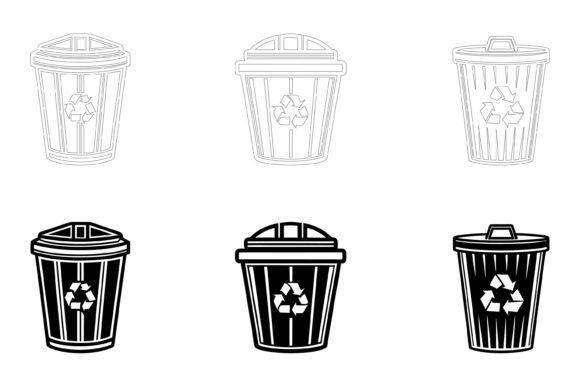
This article takes a close look at a specific resource: a curated Ai EPS illustration set built around trash can icons. Rather than generic praise, we explore what practical advantages it offers, how it performs in real-world scenarios, and whether it deserves a place in your design toolkit. By examining the file formats, editing flexibility, organization, and visual consistency, we can help you decide if this collection aligns with your project needs and workflow habits.
The Practical Need for Trash Can Icons
Trash can icons appear in contexts ranging from mobile apps to email interfaces, e‑commerce platforms, document management systems, and even printed recycling guides. Their meaning is nearly universal, which makes them a safe, intuitive symbol across cultural and linguistic boundaries. However, that ubiquity also raises expectations: users instinctively notice when an icon looks poorly proportioned, pixelated, or stylistically mismatched with the rest of the interface. A well‑crafted icon communicates clarity and confidence; a lazy one can subtly erode trust.
For designers, building a trash can icon from scratch every time a new project starts is rarely efficient. Reusable assets fill that gap, but only if they come in formats that allow deep customization without loss of quality. That is where vector‑based Ai and EPS files become essential. They preserve the crisp edges at any resolution and give the designer complete control over every stroke and fill.
What Sets Ai EPS Collections Apart
Not all icon files are created equal. Raster formats like PNG or JPG lock you into fixed pixel dimensions and background colors, making them awkward to adapt for large prints or dark‑mode interfaces. In contrast, Ai (Adobe Illustrator) and EPS (Encapsulated PostScript) files store graphics as mathematical paths. You can scale them to billboard size or down to a tiny mobile button without ever seeing jagged edges. They also keep layers and shapes separate, so modifying just the lid of a trash can or adjusting the internal lines becomes a matter of a few clicks.
This particular collection includes both Ai and EPS files, plus a JPG preview for quick reference. The dual vector format means it fits into almost any professional pipeline. Whether you primarily use Illustrator, a CorelDRAW workflow, or open‑source tools like Inkscape that read EPS, the assets remain accessible. That level of compatibility anticipates the reality that most design teams are not homogenous; people switch between Mac and Windows machines, and files that break across operating systems cause unnecessary delays.
Examining the File Organization and Layer Structure
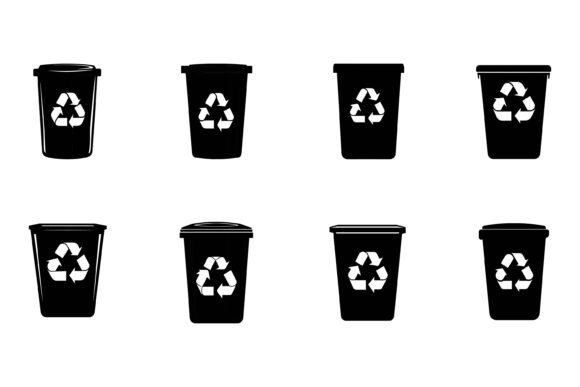
When you open a poorly structured icon file, you often find a mess of unnamed paths, grouped objects that defy logic, and hidden elements that surprise you during export. The difference with a thoughtfully prepared set is immediate. Each trash can variation is neatly placed on its own layer or artboard, clearly labeled, and free of leftover construction guides. This collection emphasizes a systematically organized file and layer structure, which translates to less time hunting for the right element and more time refining the design.
For instance, if you need a circled trash can for a button and a standalone outline version for a toolbar, you can toggle layer visibility or navigate to the relevant group without disturbing the rest of the artwork. For production‑focused environments—such as a UI design team outputting dozens of screens per sprint—this predictability is a quiet but meaningful productivity gain. Even freelancers who juggle multiple client files benefit from a structure that stays consistent from one asset pack to the next.
Customization and Color Editing: A Designer's Perspective
One of the most frustrating experiences is importing an icon set only to realize that the colors are baked into a way that makes recoloring a tedious chore. The described Ai EPS collection specifically supports easy editing: change colors, modify shapes, and adjust the icon to match a brand palette without breaking a sweat. Because the vector objects are unflattened, you can select the bin body, the lid, or a delete arrow inside it and apply a new hex value, gradient, or even a pattern fill.
This flexibility goes beyond simple color swaps. Need a metallic‑looking trash can for a game interface? You can tweak individual gradient stops. Want a minimalist line art version for an infographic? You can strip away the fills and keep the strokes, then adjust stroke weights uniformly. The ability to edit the icon so easily according to specific demands means you are not locked into a single visual style. That adaptability makes the set useful across multiple projects that might otherwise require buying entirely different icon packs.
Consistency and Detail: The Mark of Quality Icons
Perfection in details and consistency might sound like marketing language, but in practical terms, it means the difference between an icon that looks polished and one that looks amateurish. Examine a set of ten trash can icons: do the line weights vary haphazardly? Are the curves perfectly smooth or lumpy? Does the perspective remain coherent across variations? A consistent set ensures that all icons feel like they belong to the same family, which is crucial when a single interface might display multiple states—empty bin, full bin, a trash can with a cross, a recycling variant, and so on.
The promised attention to detail shows up in elements like the subtle rounding of corners, the balanced spacing of inner lines, and the proportionality of the handle to the can. Such nuances are easy to overlook during rapid icon creation, but they accumulate and affect the overall harmony of a layout. For a designer, having that level of refinement already baked into the source files reduces the need for time‑consuming micro‑adjustments later.
Cross‑Platform Reliability: Mac and Windows Workflow
Design studios often mix operating systems. A project might begin on a Windows workstation and later move to a Mac for presentation or further development. File corruption or missing font issues can plague incompatible formats, but Ai and EPS files are designed for cross‑platform use. This collection’s explicit compatibility statement is backed by the choice of formats: AI works natively in Illustrator on both OSs, and EPS serves as a reliable interchange format that virtually all professional vector software can read.
Even if you do not use Adobe products, tools like Affinity Designer and CorelDRAW handle EPS smoothly. The presence of a JPG preview file also helps quickly browse the icons without launching a heavy‑duty editor. That small convenience saves time when you are searching through asset folders and need to visually confirm the set you want to use.
Versatile Applications: Print, Web, Symbols, and Infographics
Modern design demands assets that transition between mediums without quality loss. The collection is intended for print, web, symbols, apps, and infographics—a wide spectrum. For print designers, vector files mean you can place a trash can icon on a poster, a recycling brochure, or product packaging at 300 dpi and above with complete sharpness. Web and app designers value the ability to export clean SVGs or PNGs at multiple resolutions, especially for responsive interfaces where an icon must look crisp on both standard and high‑PPI screens.
Symbol creation is another area where these icons prove handy. In a tool like Sketch or Figma, you can import the vector artwork, turn it into a reusable component, and propagate edits globally. Infographic creators appreciate icons that hold up when enlarged alongside data visualizations, ensuring that visual language remains clear. The editability extends to monochrome treatment, line art simplification, or even adding context‑specific details—like a trash can with a clock for time‑based data deletion themes.
Who Stands to Gain the Most
User experience designers and front‑end developers benefit directly from having a clean, standardized icon set that can be recolored to match dark mode, brand themes, or accessibility requirements. Marketers and content creators who build landing pages or slide decks can drop in these icons to illustrate deletion safeguards, data cleanup features, or environmental messaging without commissioning custom illustrations. Educators and publishers producing worksheets, e‑books, or interactive materials can use the icons to visually differentiate sections or instruct users on software usage.
Small business owners who handle their own website maintenance or social media graphics find value in a purchase that removes the technical barrier of creating high‑quality vector assets from scratch. Even serious hobbyists working on personal apps, indie games, or community newsletters can leverage a well‑built icon set as a learning tool—studying the layer organization and path construction to improve their own vector skills.
Potential Limitations and Realistic Expectations
No icon set is universally perfect. One consideration is whether the artistic style of these trash can icons matches your existing visual language. They might lean toward a flat, modernist aesthetic or a slightly skeuomorphic look, depending on the execution. Before integrating them into a mature brand system, compare the stroke widths, corner radii, and overall vibe with your current icons. Inconsistency could force you to spend time modifying things heavily, which slightly erodes the time‑saving advantage.
Another point relates to licensing. Ensure that your intended use—whether commercial apps, resale as part of a template, or merchandise—aligns with the usage rights provided. While the set is ready to edit and adapt, redistribution of the raw files as a competing product is typically not covered. Most professional designers already understand this, but it is worth confirming before embedding the icons in a high‑profile project.
How It Holds Up Over Time
Design trends shift, but trash can icons remain remarkably stable in their core symbolism. The value of a vector‑based illustration set grows over the years because you can always open the Ai or EPS files and tweak them to match a new visual direction. Unlike a one‑off raster graphic that becomes obsolete as screen resolutions increase, vector assets age well. If you maintain a personal library of reusable elements, this collection can serve as a consistent starting point for many future jobs, reducing the need to search or purchase icons for the same function repeatedly.
Weighing the Investment
For the time‑sensitive professional, the cost of an icon set is measured against the hours saved not building and debugging custom vector artwork. A set that arrives with a clean layer structure, cross‑platform compatibility, and easy editability pays for itself quickly when you bypass the trial‑and‑error of aligning anchor points or re‑exporting corrupted files. Seasoned designers also appreciate the quiet confidence that comes from using assets with reliable precision—no awkward misalignments discovered during client review.
At the same time, if your workflow already includes a mature design system with thousands of custom icons and you rarely need a new trash can variant, the incremental value may be lower. The set is most powerful as a launchpad or gap‑filler, not necessarily a replacement for a comprehensive icon library you have already perfected.
Optimizing Your Workflow with Ready‑to‑Edit Assets
Integrating the icons into your daily work can start simply. Drag the Ai file into your project as a linked asset, create an instant symbol library for a wireframing tool, or use the EPS to quickly generate multiple‑color variants for a style guide. Because the internal structure is organized, you can even hand off the file to a junior designer or collaborator with minimal explanation, keeping your team moving without extensive onboarding. The promise of easy editing rests on that orderliness: when layer names make sense and elements are not tucked away in obscure clipping masks, the creative process accelerates.
For print‑specific tasks, the vector nature of the icons means you can achieve the same high fidelity on a small mailing label as on a large trade show banner. Just set the artboard, adjust the stroke widths proportionally if needed, and export. Web designers can effortlessly create dark‑mode versions by inverting fills or swapping to a light stroke scheme—nimble work that is often required in modern UI design.
Bringing It All Together
Trash can icons might not be the most glamorous design elements, but their reliability and recognizability make them indispensable. A collection like this Ai EPS illustration set addresses the practical side of that indispensability by giving designers clean, customizable, and well‑organized source files that work across operating systems and media. The ability to edit colors, reshape components, and export for any resolution elevates the set beyond a static decoration into a genuinely flexible resource. Whether you are a marketer assembling an infographic, an app designer refining a deletion flow, or an educator creating clear instructional visuals, the combination of detail, consistency, and effortless modification can help you maintain quality while keeping production moving. If your projects frequently call for clear delete, discard, or recycling symbols—and you value having full control over the final look—this icon set offers a solid foundation worth keeping within reach.