Army Mask Icon: Integrating Professional Vector Graphics into Everyday Design Workflows
When you download an Army Mask Icon illustration set, you are not just collecting a single image. You are acquiring a flexible asset prepared to slide into print layouts, web interfaces, mobile apps, presentations, infographics, and branding exercises without friction. The real value emerges when you understand where this kind of resource fits in your routine—before a project begins, during intense editing sprints, and long after you have handed off the final file. This article walks through how an Army Mask Icon works as a practical design element, how it interacts with your existing tools, and what makes it easier to maintain speed and quality across different deliverables.
What the Army Mask Icon Actually Offers in a Production Setting
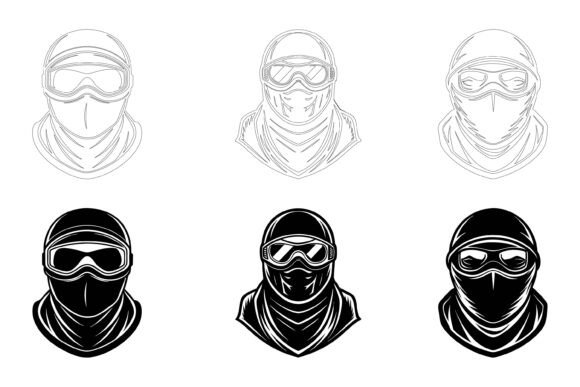
At first glance, the Army Mask Icon serves as a thematic graphic—military, protective, tactical. But beneath the surface, the file structure matters more than the visual theme. The download includes AI (Adobe Illustrator), EPS, and JPG formats, which means you receive the original editable vector, an encapsulated version for older or alternative software, and a ready-to-use raster preview. This combination supports a workflow where you might begin by reviewing the JPG in a file manager or a collaboration board, then open the AI file when you need to adjust stroke weights or match colors to a client’s brand palette, and finally export an EPS for a printer who works with legacy equipment.
The file architecture itself is designed to reduce friction. Neatly organized layers let you isolate the mask shape from any background elements, swap fill colors in seconds, or pull out a silhouette for an app icon. Perfection in details means the edge nodes are positioned cleanly, so when you scale the icon from a 32-pixel feed symbol to a full-bleed poster graphic, there are no misaligned curves. This consistency eliminates the quiet frustration of finding a broken path right before a deadline.
Fitting the Army Mask Icon into Your Broader Creative Process
Most projects follow a rhythm—discovery, planning, creation, review, and delivery. An Army Mask Icon can enter at multiple stages depending on the nature of the work. If you are building a brand identity system for a security firm, you might bring the icon in during the early concept phase. You can place the JPG on a moodboard, discuss how the mask imagery reinforces trust and protection, and present a few rough color variations directly from the AI file by toggling global swatches. Because the file is layered and organized, you can prototype quickly without rebuilding anything.
During the creation stage, especially when producing marketing collateral, the EPS format becomes useful in page-layout applications like Adobe InDesign or Affinity Publisher. You can link the vector, keep file sizes manageable, and retain the ability to update colors later. If the project shifts—say the client decides to move from a dark-themed brochure to a light-themed website—you simply open the AI file, invert the palette, save, and all linked instances refresh. This fluid interaction between the icon and your layout software keeps you responsive rather than reactive.
After project delivery, the asset does not lose its value. An organized designer keeps reusable components in a library. Because the Army Mask Icon is fully editable and available in open formats, you can archive the AI and EPS files alongside style guides. Months later, when a new request appears for social media graphics or an internal training manual, you grab the icon, adapt it, and maintain visual continuity without starting from scratch.
Editing and Customization Without the Usual Headaches
The icon’s design prioritizes ease of editing. When you open the AI file, you will typically find grouped elements with clear naming—outer mask shape, inner filter details, strap paths, and maybe subtle shadow layers. This structure invites modification. If you need a flat version for a UI component, you can disable the shadow layer. If the brand guidelines call for a duotone treatment, you select a single shape group and apply the designated color. The key is that you edit directly, without having to release complex compound paths or manually delete stray anchor points.
Accessibility improvements also become simpler. If the icon will appear over a dark background, you might need a reversed-out version. Rather than creating a new file from scratch, you can duplicate a layer, change its fill to white, and adjust the stacking order. Because the original construction is precise, the reversed version maintains the same visual weight. This kind of adaptability matters when you are working across web banners, email headers, and printed reports where contrast requirements shift.
Additionally, the ability to modify the icon quickly helps when you need variations. An Army Mask Icon might look one way for a primary logo mark, but a simplified version might be better for a 16-pixel favicon. By reducing detail in the AI file—perhaps removing small filter vents or combining strap elements—you can generate an icon set that scales appropriately. The master file remains intact, and the simplified versions become exported assets for specific use cases.
Keeping Quality Consistent Across Print, Web, and Apps
Consistency is a silent indicator of professionalism. When a viewer sees your brochure, then visits the corresponding landing page, then opens the mobile app, the Army Mask Icon should appear equally sharp and identically colored. Vector originals make this possible. For print, you export or save as a high-resolution PDF or EPS with CMYK values. For web and apps, you use the same AI file to generate SVG or PNG files at multiple resolutions. Because the icon was built with precise nodes, the SVG output remains clean and lightweight, avoiding bloated code that slows down page load times.
Color management also stays predictable. The AI file can hold both CMYK and RGB color swatches, allowing you to prepare print-ready and screen-ready versions from one source. If you work with a team, you can share the AI file with a note about which swatches to use. There is no guessing whether the olive green on the mask should be Pantone 5743 C or #4B5320. The swatch names remove ambiguity and reduce the rework that comes from mismatched color values across media.
Cross‑Platform Compatibility and Smooth File Handoffs
The icon set is designed for both Mac and Windows users, which matters in real work environments where designers might be on macOS and marketing managers on Windows. The AI and EPS formats are widely recognized, and JPG serves as a universal fallback. When you send files to a client for review, they can open the JPG immediately. When the design is approved, you can deliver the editable AI file without worrying about operating system barriers. In a remote or hybrid team, this compatibility reduces the back-and-forth emails asking for alternate formats.
Handoffs to developers become less stressful as well. If you are providing assets for a web application, you can export the Army Mask Icon as an SVG and include a note about the viewBox and responsive scaling. You can also generate PNGs at 1x, 2x, and 3x sizes. Since the original vector is clean, these exports are crisp. Developers spend less time adjusting alignment or fixing jagged edges. The result is a faster path from design prototype to functional interface.
Organizing and Storing the Icon for Long‑Term Efficiency
One of the most underappreciated aspects of a well-prepared icon file is how it influences your personal asset management. When you purchase an illustration set that is neatly organized from the start, you are more likely to maintain that organization over time. You might create a master folder for “Vector Icons,” place the AI, EPS, and JPG files inside a subfolder named “Army Mask Icon Set,” and add a small text file with notes on swatches and layer structure. This habit prevents the dreaded dump of random files months later, where you cannot remember which file was the editable version.
For heavy users of design asset libraries, the icon can be imported into Adobe Creative Cloud Libraries, Affinity’s Assets panel, or even stored in a shared cloud folder with preview thumbnails. When the next project calls for a tactical or security-related graphic, you will find the asset in seconds rather than recreating it. Over the course of a year, this small organizational practice saves hours.
Using the Army Mask Icon in Multidisciplinary Projects
The icon is not confined to traditional graphic design. Educators preparing a lesson on protective equipment can embed the Army Mask Icon into a slide deck or an instructional handout. The clean vector lines print well on course materials and project clearly on screens. Bloggers or content marketers covering safety gear might use the icon as a featured image or within an infographic, adjusting the color to match their site’s theme. The flexibility of an editable vector means the icon can be dialed back to a subtle outline or amplified with bold fills depending on the context.
Infographic designers will appreciate how quickly the icon can be recolored to align with a data visualization scheme. If you are mapping military spending or defense statistics, the mask can serve as a category marker. Because layer groups keep details separate, you can emphasize or de-emphasize certain parts without ruining the overall silhouette. Similarly, app developers building a themed UI can treat the icon as a tab bar element, onboarding illustration, or notification badge. The icon’s detail level remains recognizable at small sizes, which is a direct benefit of the original designer’s attention to perfection in details.
Preparing the Icon for Specific Output Scenarios
Before you start dragging the Army Mask Icon into a live project, a quick preparation step saves downstream effort. Open the AI file first, not the JPG. Check the color mode and switch to the appropriate working space—CMYK for a print job, RGB for digital. If the icon contains strokes, consider outlining them or confirming they scale properly. Some printing processes require outlined strokes to avoid unexpected widening. The file’s organization makes this check fast because you can select all stroke-based layers and outline them in one action.
For web use, you may want to strip out unnecessary metadata and simplify layer names to make the SVG even smaller. Even without extensive technical knowledge, you can use Illustrator’s export for screens or SVG export options to generate optimized output. Because the original paths are already efficient, the automated optimization produces good results with minimal tweaking.
How the Icon Interacts with Other Tools and Assets
No design asset works alone. The Army Mask Icon often sits alongside typography, photographic content, and other icons to form a complete composition. Its vector nature means it can be easily combined with other vector elements. For instance, you might place the mask inside a badge shape or overlap it with a typographic lockup for an esports team. The layer structure allows you to experiment with blending modes and opacities without breaking the base artwork.
When imported into presentation software like PowerPoint or Keynote, the EPS or high-resolution JPG versions ensure the icon does not pixelate on a large screen. You can also ungroup the vector in compatible software and animate certain layers—perhaps the mask appears first, followed by a glow effect. These creative decisions stem from having a source file that is built properly from the start.
In collaborative environments where multiple people touch the same asset, the editable format stands out. A junior designer can make color changes while a senior art director reviews the result. Version control becomes manageable because the master AI file remains the single source of truth. Exports for different platforms can be regenerated without altering the original intent.
Decision Factors When Selecting a Vector Icon Set
Not all icon sets are equal. The marker of a practical set lies in how quickly you can go from download to deployment. The Army Mask Icon’s collection delivers a clean file structure, dual operating system compatibility, layered organization, and meticulous detail. These qualities reduce the hidden cost of cleaning up someone else’s messy file. When you are evaluating whether to buy, consider whether the alternative is spending time redrawing paths or hunting down missing fonts. A professionally prepared icon shifts your energy toward creative decisions rather than technical fixes.
Also think about longevity. Trends change, but a well-constructed vector stays usable for years. You can open the AI file in future software versions, adjust the artwork, and keep up with evolving brand requirements. The EPS format remains a reliable exchange vehicle even as design tools evolve. JPG provides immediate backwards compatibility for any scenario where vectors are not supported.
Practical Integration Tips for Smooth Daily Use
- Set up a template file that includes your brand colors as global swatches. Open the AI file, import swatches, and save a brand-specific version of the icon. Future projects launch faster.
- Use the JPG for quick approvals. Before spending time on detailed edits, share the JPG in a presentation or chat to confirm placement and size.
- Maintain a changelog inside the AI file’s note area or as a separate text file. Note any modifications like color adjustments or layer deletions. This helps when you revisit the file months later.
- Export multiple sizes in one go. Use Illustrator’s asset export panel to generate PNGs at 24, 48, 96 pixels, etc. Name them consistently so developers can reference them easily.
- Keep the original download untouched. Work on a duplicate so you always have a pristine version to revert to if needed.
Moving from Asset Collection to Execution
Owning an Army Mask Icon set is not the endpoint; it is the beginning of frictionless execution. When a new assignment arrives—a trade show banner, a safety manual cover, an app update—you already have a adaptable graphic that respects your workflow. The time saved on technical preparation translates into more time for refining the overall composition, testing layout variations, or simply meeting a tight deadline without panic.
Whether you are a freelancer juggling multiple clients, a marketing manager requiring consistent collateral, or an educator building engaging materials, the icon’s design considerations align with how real work happens. You edit quickly, export confidently, and maintain brand integrity across every output. The combination of layer organization, format flexibility, and detailed precision means the Army Mask Icon moves through your tools and teams without introducing unnecessary friction.
The icon’s file package—AI, EPS, JPG—suits both Mac and Windows setups, and its editable nature invites customization rather than limiting you to a static visual. When you integrate it into your process, you gain a component that behaves the way you expect, responds to changes without breaking, and stays usable long after the initial download. That is what makes an illustration set genuinely special in day-to-day creative work.