How a Fox Head Logo Mascot Strengthens Brand Identity Across Digital and Print Workflows
Choosing a mascot for your brand is not simply about picking an animal that looks appealing. It involves understanding how that visual symbol will function across dozens of contexts—from a website favicon to a large-format trade show banner. The fox, with its associations of cleverness, adaptability, and speed, has become a popular choice for companies wanting to project intelligence without appearing cold or overly corporate. A Fox Head Logo Mascot gives you a concentrated focal point that works well in both playful and serious brand environments, provided the source file gives you enough control to adapt it properly.
What often gets overlooked in the initial excitement of finding a great mascot illustration is what happens after the download. You need to change a color to match a revised palette, isolate the head from the body for a circular badge, or output a crisp monochrome version for a receipt printer. If the file is not built with these scenarios in mind, you will spend hours undoing poorly merged layers or redrawing details that should have been preserved. This is where the quality of the original AI and EPS illustration set becomes the dividing line between a smooth implementation and a frustrating detour in your project timeline.
What Makes a Vector Mascot Illustration Truly Usable
Many marketplaces are saturated with mascot graphics that look impressive in preview but turn into a mess when you open them in Illustrator. Paths that were expanded without care, clipping masks piled on top of each other, and dozens of unnamed layers make simple edits a guessing game. A Fox Head Logo Mascot that arrives with a cleanly organized file and layer structure changes that experience completely. You can see exactly where each element lives—the left ear highlight, the muzzle shading, the eye pupil—and target your modifications without disturbing adjacent shapes.
This matters more than most beginners realize. When you are working under a deadline and a client asks you to produce a reversed white version for a dark background, you do not want to discover that the white areas of the fox head are actually transparent holes cut out of a solid shape. With properly constructed AI and EPS files, you can isolate the fill of any region and recolor it in seconds. This level of control speeds up everything from creating seasonal variations of your logo to preparing assets for different subsidiary brands that share the same parent identity.
File Format Compatibility and Cross-Platform Workflows
The inclusion of AI, EPS, and JPG formats in a single illustration set is not a minor convenience—it is a recognition that design and marketing teams operate across multiple software environments and have diverse output requirements. Adobe Illustrator remains the standard for vector editing, but not everyone on your team will have access to it. An EPS file can be placed into older versions of CorelDRAW, Affinity Designer, or even video editing software that supports vector import. The JPG preview gives non-designers a quick reference image they can drop into a presentation or share via email without needing any specialized software.
The fact that the set is designed for both Mac and Windows users means you avoid the font substitution issues, path rendering glitches, and color profile mismatches that sometimes occur when files are created exclusively on one platform. For a Fox Head Logo Mascot that may need to pass through the hands of a marketing coordinator on Windows, a freelance designer on Mac, and a print shop running older RIP software, this cross-platform compatibility is a quiet but essential workhorse feature.
Editing Flexibility and Color Customization in Practice
Brand colors rarely stay static over the life of a company. Even if you commission or purchase a mascot with a specific palette in mind, you will eventually need to adapt it for a co-branded partnership, a seasonal campaign, or a product line variation. The ability to change colors and modify the icon easily is not just about convenience—it is about protecting your investment in the illustration over time. A Fox Head Logo Mascot built with well-separated, unflattened vector shapes lets you recolor the entire head in one step or fine-tune specific accent areas like the ear interiors, nose, and eye highlights independently.
Beyond color, modification extends to shape and composition. You might want to use only the fox head without any surrounding typography for an app icon, stretch the ears slightly for a more stylized version used on merchandise, or extract just the silhouette for a cut-vinyl decal. When layers are thoughtfully named and grouped—rather than lumped into a single compound path—these modifications become straightforward enough that even team members with intermediate vector skills can handle them without breaking the artwork.
Detail Consistency and Quality Control Across Use Cases
Consistency in illustration detail becomes visible when you scale a graphic to extremes. A mascot that looks cohesive at 200 pixels wide might reveal sloppy bezier curves, uneven stroke widths, or misaligned highlights when blown up to billboard size. The emphasis on perfection in details and consistency means the Fox Head Logo Mascot maintains its integrity whether it appears as a tiny social media avatar or a large-format print. This is achieved through symmetrical construction where appropriate, smooth curve transitions, and uniform treatment of highlights and shadows across all parts of the head.
For print applications, this level of precision prevents unpleasant surprises after a run of business cards or packaging comes back from the printer. Jagged edges that were invisible on screen, color breaks that leave thin white gaps between adjacent shapes, and details that fill in when printed at small sizes are problems rooted in poorly constructed vector files. A well-organized source file with attention to detail helps you sidestep these issues entirely, letting you focus on the design decisions that move your project forward rather than on fixing technical defects.
Where a Fox Mascot Fits into the Broader Branding Process
A mascot logo rarely exists in isolation. It typically becomes part of a larger identity system that includes wordmarks, taglines, color palettes, typography choices, and supporting graphic elements. The fox head needs to complement these components without competing with them. When you have full editing control over the illustration, you can adjust the visual weight, simplify details, or introduce negative space that echoes shapes found elsewhere in your identity system. A designer working with a Fox Head Logo Mascot as a starting point often finds that it sparks ideas for secondary motifs—paw print icons, tail swoosh patterns, or geometric fox ear shapes that can be used as UI elements or background textures.
Think about how the mascot will interact with your specific layout constraints. A horizontally oriented website header might work best with just the fox head peeking in from the left edge. A circular sticker format might require cropping the head into a badge shape. A mobile app loading screen might use a simplified, flat version of the head with reduced detail. Each of these scenarios demands slightly different treatment, and the workflow is only efficient if the source file structure supports these variations without forcing you to rebuild anything from scratch.
Practical Implementation Across Digital and Print Media
Digital platforms impose their own technical requirements that extend beyond simple image placement. Websites need SVG or optimized PNG versions with transparent backgrounds, app stores have precise icon dimension specifications, and email signatures require lightweight image files that do not trigger spam filters. A Fox Head Logo Mascot delivered in well-organized vector formats makes generating these derivatives straightforward. You can export directly from the AI or EPS file to any required raster format with exact pixel dimensions, or use the vector data directly for SVG output that remains crisp on high-density screens.
Print workflows demand attention to color space, bleed, and overprint settings that are not relevant in digital contexts. The mascot may need to be converted from RGB to CMYK, have spot color channels assigned for specialty inks or foil stamping, or be simplified to a single-color version for screen printing on apparel. The layer organization within the source file plays a critical role here. Separating the fox head into logical color segments allows you to assign different print treatments to different areas without painstaking manual selection each time.
Symbol and infographic use cases present another dimension. The fox head might serve as a category icon in an annual report, a bullet point graphic in a slide deck, or a marker on a map in an event brochure. At small sizes, fine details become noise, and the visual weight of the icon needs to balance against surrounding text and data visualizations. A Fox Head Logo Mascot that scales cleanly and maintains clarity when simplified supports these information design applications without requiring a separate icon set to be commissioned.
Long-Term Asset Management and Team Collaboration
As your organization grows, the number of people touching brand assets multiplies. Freelance designers on short-term projects, internal marketing staff updating templates, outside agencies running campaigns, and vendor partners producing merchandise all need access to logo files that are well-organized, clearly labeled, and platform-agnostic. When you start with an illustration set that prioritizes neat organization, you reduce the time spent answering "which file should I use" questions and prevent someone from accidentally using a flattened JPG as the basis for a large print order.
Consider building a small style guide around your mascot usage. Document the minimum sizes at which certain detail levels remain effective, specify the approved color variations and when to use each one, and include examples of what not to do—stretching, recoloring without contrast checking, or placing the head on busy backgrounds. This documentation effort pays back immediately whenever a new team member joins or an external partner requests brand assets. A Fox Head Logo Mascot that stays useful over years rather than weeks often depends as much on how you manage the files as on the initial illustration quality.
Integration with Other Design Resources and Platforms
No designer operates in a silo. The mascot you choose will likely need to coexist with stock photography, custom illustrations, icon sets, and UI kits from various sources. Stylistic consistency across these elements can make or break the perceived professionalism of a finished product. A fox head with a specific line weight, corner radius, and level of geometric simplification sets an expectation that other vector elements should aim to match. Having complete editing control means you can adjust the mascot to harmonize with external resources—thickening strokes, flattening gradients, or rounding sharp corners—until the whole composition feels cohesive.
Some project workflows involve placing the mascot into templates for social media posts, email newsletters, or landing pages. If you use platforms like Canva, Figma, or Adobe Express alongside Illustrator, the ability to import clean SVG or EPS files and have them render correctly streamlines the production process. A Fox Head Logo Mascot that retains its quality through format conversions avoids the pixelation and artifact issues that plague teams forced to work from low-resolution source material passed through too many hands.
Why Organization and Preparation Matter More Than Flashy Features
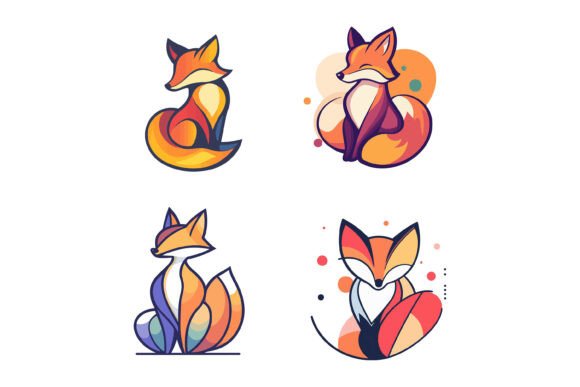
It is tempting to judge an illustration purely on its visual appeal. The preview image on a marketplace listing shows a polished, color-saturated fox head that looks ready to use. But spending a few minutes thinking about the underlying file quality saves days of rework later. Organized layers that are actually named according to their contents—rather than Layer 1, Layer 2, Layer 37—make it possible for someone who did not create the file to navigate it efficiently. Groups that logically cluster related parts of the head mean you can collapse them and focus on the section you are actively editing without visual clutter.
This level of preparation in the source files also supports version control practices. If you make a series of edits across several weeks and need to revert to an earlier state of just the fox head's color treatment without undoing changes to the layout, well-structured layers make it possible to extract what you need. A Fox Head Logo Mascot with neatly organized files becomes an asset that supports iterative design processes rather than forcing an all-or-nothing approach to every revision.
Making the Decision to Integrate into Your Current Project
Most professionals evaluating a mascot illustration are in the middle of a project with a timeline. Whether you are launching a new product, refreshing an outdated brand, or building out assets for a client, the practical factors that determine whether a purchase is worthwhile include how quickly you can take the file from download to first usable output. A set that includes multiple formats, maintains platform compatibility, and respects logical file organization gets you to a working result faster than one that requires cleanup and reconstruction.
Consider downloading the set and immediately running through a small checklist of common modifications you anticipate needing. Try recoloring the main fill area. Attempt to isolate the head outline. Export a version at a social media profile image size and check for detail preservation. Generate a grayscale version and assess contrast. This quick audit tells you whether the Fox Head Logo Mascot will support the range of applications you have planned or whether it will fight you at every turn. When the file passes these tests cleanly, you can proceed with confidence that your workflow will remain efficient through every implementation phase.